What Are UGC Ads? Meaning, Examples, Retargeting and When to Use Them
UGC ads explained: the meaning, the formats that work, UGC vs influencer vs whitelisted ads, Meta retargeting, disclosure rules and who owns the content.

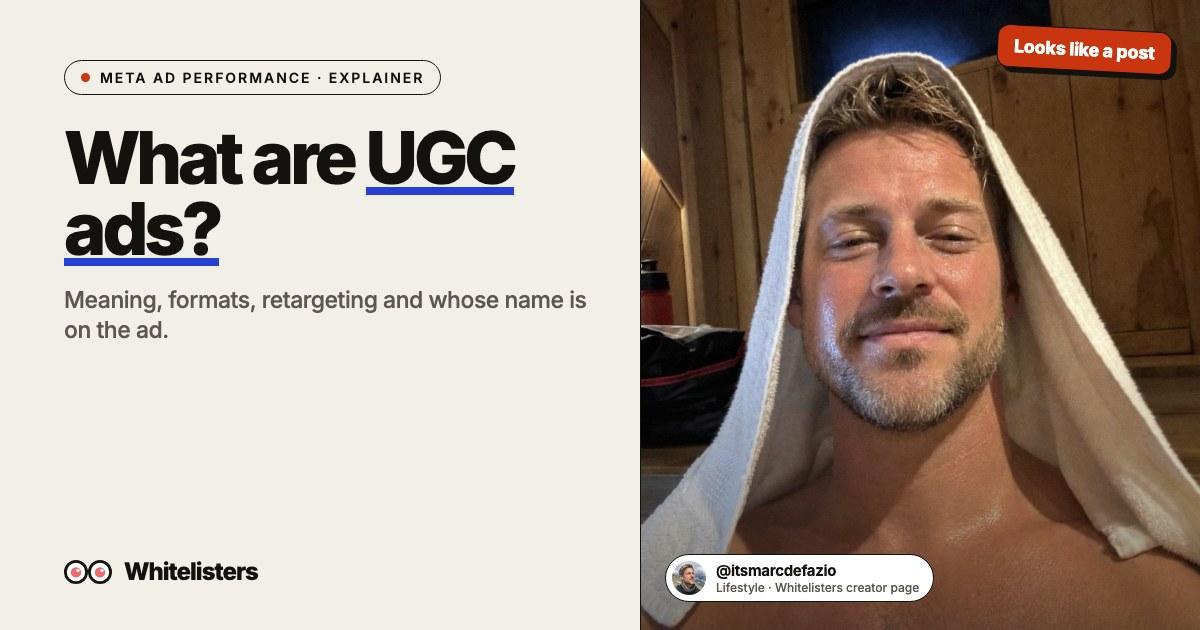
UGC ads are paid ads built from content that looks like it was made by a customer or an everyday creator rather than by the brand: a phone-shot video, a person talking to camera, an unboxing, a before and after. The brand pays for the content, licenses it, and runs it as an ad from its own page. The point is that the ad does not look like an ad, so it earns the attention a polished brand video would be scrolled past.
This explainer covers the UGC ads meaning in plain terms, the formats that show up most, what to agree with the creator before you run one, how to use UGC in Meta retargeting, and the one thing most guides skip: a UGC ad still runs under the brand’s name, which is where whitelisting comes in.
What are UGC ads? The meaning, and what UGC-style means
UGC stands for user-generated content: content made by users of a product, not by the company. In advertising the term has stretched. Most “UGC ads” today are made by paid UGC creators who were briefed by the brand, shot the video on a phone in their kitchen or car, and delivered it as a file. That is why you also see UGC-style ads, which is the more accurate name: the production style of a customer post, commissioned by the brand. A genuine customer review turned into an ad is UGC in the original sense; both run the same way.
What is a UGC creator, then? A person who makes this kind of content for brands as a job, usually without a large following of their own and usually without posting the content to their own account. They sell the file and a license to use it, not reach. That distinction separates UGC creators from influencers, and it is why UGC ads and influencer campaigns are priced and run differently.
UGC ads examples: the formats that recur
The best UGC ads share a structure more than a subject. These are the formats you will see in any ad library search, described rather than named, because what makes them work is the shape:
- Talking-head testimonial. One person, front camera, one specific result (“I stopped waking up at 3am”). The first sentence is the hook; the product appears by the third.
- Unboxing or first use. The parcel, the opening, the first reaction. Works for physical products because it answers “what do I actually get” in the ad itself.
- Problem, then product. Ten seconds on the annoyance, then the fix. The viewer self-selects in the first half, which is why these often have lower cost per result despite lower click-through.
- Before and after. Skincare, fitness, home, software dashboards. Needs to be true and provable; see the disclosure section.
- Point of view and routine. “Get ready with me”, a morning routine, a day of meals. The product is one step among several, which reads as a recommendation rather than a pitch.
- Reaction and response. On TikTok, a stitch or duet on a question or a sceptical comment. TikTok UGC ads often start life as organic posts and are then promoted as Spark Ads, which run the post from the creator’s own account.
UGC ads vs influencer ads vs whitelisted ads: what is the difference?
All three put a person in the ad. They differ on whose name the ad carries and who the content was made for.
| UGC ad | Influencer ad (boosted sponsored post) | Whitelisted ad (partnership ad) | |
|---|---|---|---|
| Who made the content | A paid UGC creator or a customer, to the brand’s brief | The influencer, for their own feed | The brand or the creator; new creative is common |
| Whose name is on the ad | The brand’s page | The influencer’s handle (with the brand tagged) | The creator’s handle, with the brand tagged |
| What you buy | The file and a usage license | A post to their followers, plus permission to boost it | Permission to advertise from their account |
| Labels | Sponsored or Ad | Paid partnership with the brand’s name, plus Ad | Paid partnership with the brand’s name, plus Ad |
The second row is the one most UGC guides leave out. A UGC ad looks like a person, but the advertiser shown is your brand, so the viewer’s “this is an ad from a company” filter is still on. Whitelisting changes the name on the ad to the creator’s. The two stack: a UGC video can run from a whitelisted creator page, which is the combination whitelisting vs UGC ads compares in detail, with the one controlled test we have on the identity half.
How to optimize UGC for Meta ads retargeting
UGC earns its keep in retargeting because the people seeing it already know the brand and are weighing a decision; a peer’s account of using the product is the right message at that moment. Meta’s building block is the custom audience, which lets advertisers build audiences from their own data (website visitors through the Meta Pixel, app activity, customer lists, catalog interactions) or from Meta engagement (video viewers, Instagram account engagers, Facebook Page engagers, lead forms, shop activity). A practical way to match UGC to those audiences:
- Video viewers, 50% or more: they watched your prospecting ad. Serve a different UGC creator answering the most common objection, not the same video again.
- Website visitors who did not purchase: testimonial and before-and-after formats, with the offer or guarantee stated plainly.
- Cart abandoners and catalog viewers: short, product-specific UGC; a first-use clip of the exact item beats a general brand story.
- Past customers (customer list): routine and point-of-view formats that show the product in week four, aimed at repeat purchase or a second product.
Two Meta rules shape the budget. Each ad set needs enough conversions to leave the learning phase, and retargeting audiences are small, so fewer, broader retargeting ad sets usually beat many narrow ones. And because the same people see retargeting ads repeatedly, UGC there fatigues fast; Meta’s ad fatigue guidance is to refresh when frequency climbs and results fall. A bank of several UGC creators per audience is the practical answer. The rest of the performance checklist is in nine ways to lower CAC on Meta ads.
Do UGC ads need a disclosure?
If the person in the ad was paid, given free product or has any other material connection to the brand, the FTC’s Endorsement Guides apply to the endorsement regardless of the format it runs in. The guides require that endorsements reflect the endorser’s honest opinions and experience and that material connections be disclosed where the audience would not reasonably expect them. The FTC’s own plain-language summary for creators is Disclosures 101 for Social Media Influencers. Three consequences for UGC:
- Scripted claims are the brand’s claims. A creator reading a result they did not have is a false endorsement. Brief the outcome you want shown, not the words.
- Before-and-afters need to be real and typical, or qualified. The guides treat results an endorser shows as a representation that others can expect them.
- If the UGC is posted organically by the creator, the platform label applies. On Instagram and Facebook that is the Paid partnership with label; what it means and how to add it is in what does paid partnership mean. A UGC ad run only from the brand’s page carries the normal Sponsored label.
Who owns a UGC ad?
The creator, by default. Copyright in a video belongs to the person who made it, and a brand’s brief or payment does not transfer it unless the agreement says so. What brands buy is a license: for a stated period (30 to 90 days is typical for paid use, with perpetual buyouts priced higher), stated channels (paid social, website, email), a stated territory, and stated edit rights. Write down whether the license covers paid ads at all, because organic reuse and paid use are usually priced separately, and whether it covers running the content from a creator page as a partnership ad, which is a different permission again. The licensing side is set out under “creator licensing” in our terminology page; what whitelisting access costs on top is in how much influencer whitelisting costs.
When to use UGC ads, and when not to
- Use UGC when the product benefits from demonstration or social proof, when your polished creative has fatigued, in retargeting, and on placements where native-looking content wins (Reels, Stories, TikTok).
- Be careful with regulated categories (health, finance, alcohol) where every claim in the video is an advertising claim, and with products whose buyers expect production value.
- Do not expect UGC alone to fix the advertiser. The ad still runs from your brand page. If your hypothesis is that people trust a person more than a company, test the identity too, with the same UGC video on a creator page and your page, as described in partnership ads vs brand page ads.
Where Whitelisters fits
Whitelisters does not make UGC. It supplies the other half: a roster of creator pages you can run your UGC from as Meta partnership ads, so the ad carries a person’s name as well as a person’s face. What whitelisting is in general is in what is whitelisting on social media.
Frequently asked questions
What does UGC ad mean?
A UGC ad is a paid ad built from user-generated content, or content made to look like it: a phone-shot video of a person using or reviewing the product. The brand licenses the content and runs it as an ad from its own page.
What is the difference between UGC ads and influencer ads?
A UGC creator makes content to the brand’s brief and sells the file and a license; the ad runs from the brand’s page. An influencer publishes a sponsored post to their own followers, and the brand can boost it as a partnership ad under the influencer’s name.
What is a UGC creator?
Someone who makes customer-style content for brands as a job, usually without a large following and usually without posting it to their own account. They are paid for the content and its usage rights, not for reach.
Are UGC ads the same as whitelisted ads?
No. A UGC ad runs from the brand’s page with the brand’s name on it. A whitelisted ad runs from a creator’s account with the creator’s name on it. A UGC video can be run as a whitelisted ad, which combines the two.
How do you optimize UGC for Meta ads retargeting?
Build Meta custom audiences (video viewers, website visitors, cart abandoners, customer lists) and match a different UGC creator and format to each stage, keep retargeting ad sets few and broad enough to exit the learning phase, and refresh creative when frequency rises.
Do UGC ads need a disclosure?
If the person was paid or given product, the FTC Endorsement Guides apply: the endorsement must be honest and the material connection disclosed where the audience would not expect it. If the creator posts the content organically, Instagram and Facebook also require the paid partnership label.
Who owns a UGC ad?
The creator owns the copyright unless the contract transfers it. Brands buy a license for a period, set of channels and territory. Check that the license covers paid ads, and separately whether it covers running the content from a creator page.
What are the best UGC ads formats?
The ones that recur: a talking-head testimonial with one specific result, an unboxing or first use, a problem-then-product structure, a true before and after, a routine or point-of-view clip, and on TikTok a stitch or duet reaction.

Zachary DiBlasi
Zachary DiBlasi is the founder and CEO of Whitelisters and MindfulAds.com. He has managed over $200m in ad spend for brands including Kalshi, MrBeast, Descript, Framer, Justin Bieber and Runna by Strava.