Meta Ads Best Practices: A Checklist From Meta’s Own Documentation
A sourced checklist of Meta ads best practices: learning phase, budgets, targeting, creative, A/B testing, policies and partnership-ad specifics.

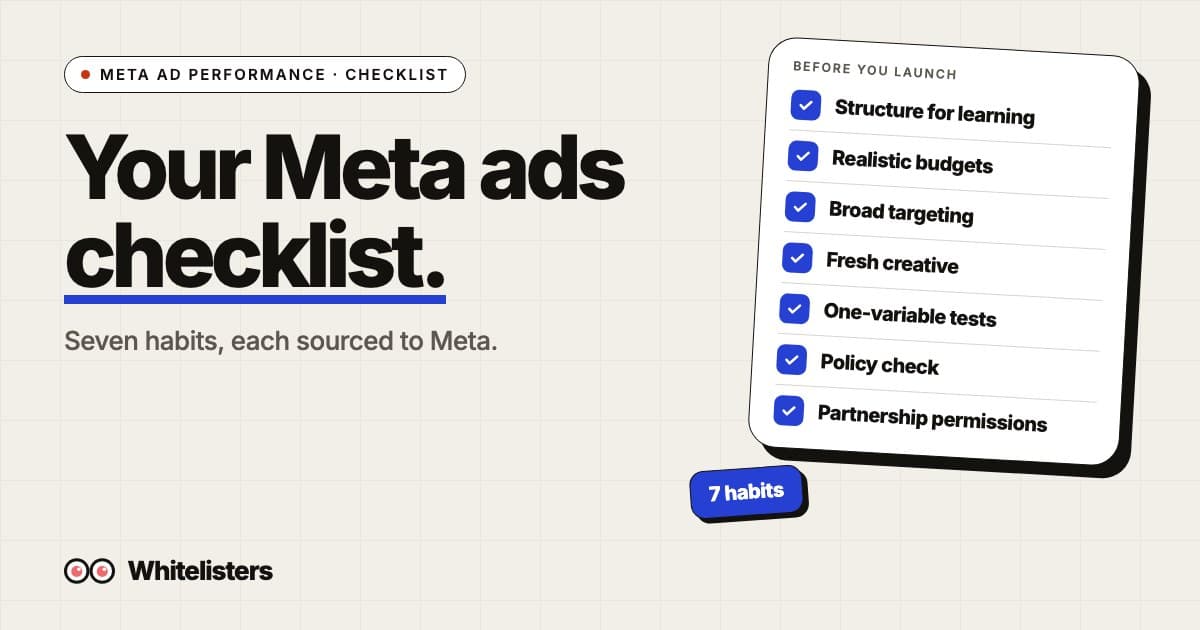
The best practices for Meta ads come down to six habits: structure for learning, size budgets for results, keep creative fresh, test one variable at a time, stay inside the policies, and measure against your own baseline. This checklist pulls them from Meta’s own Business Help Center and adds the partnership-ad specifics we use every day. Each item names its source, so you can read Meta’s wording yourself.
1. Structure for learning
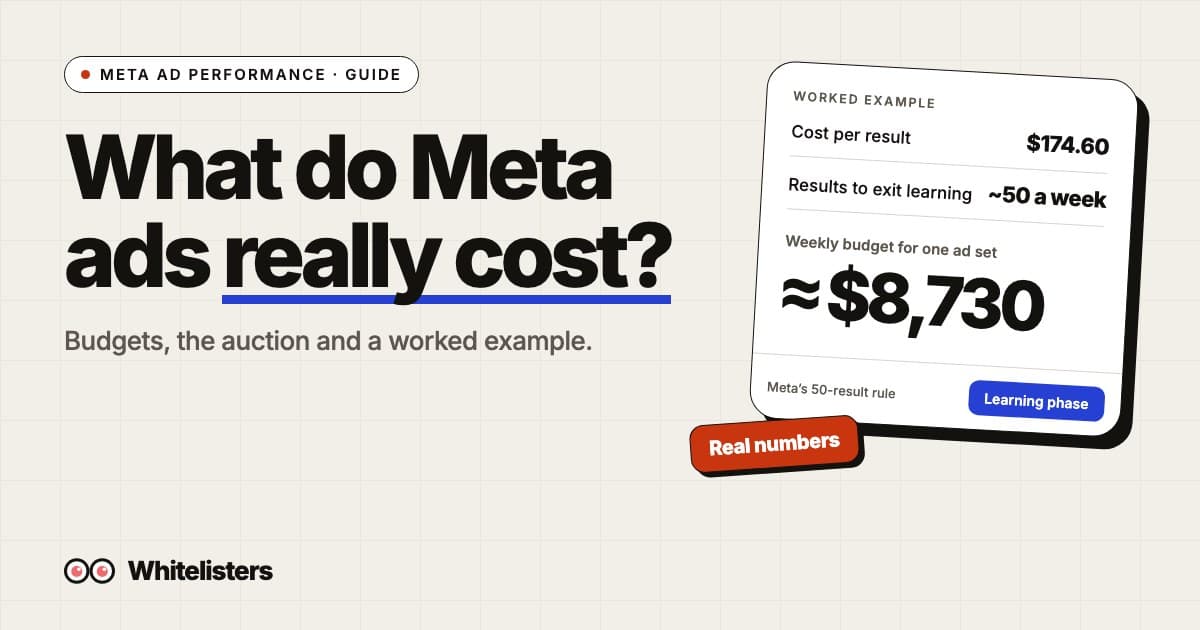
- Leave ad sets alone while they learn. Ad sets usually exit the learning phase after about 50 results in the week after the last significant edit. Meta says editing during learning resets it.
- Use fewer, broader ad sets. Meta says creating many ads and ad sets means the system learns less about each, and that combining similar ad sets combines learnings.
- Watch the status column. “Learning limited” means an ad set is not getting enough results to exit learning. Check the Last significant edit column before you change anything.
2. Size budgets for results
- Use realistic budgets. Meta warns that a very small or inflated budget gives the delivery system an inaccurate signal, and that frequent budget changes can send an ad set back into learning.
- Plan for at least seven days. Meta recommends a budget you can sustain for at least seven days so it can learn and allocate.
- Let Advantage+ campaign budget do the splitting. It distributes the budget in real time to the ad sets with the best opportunities.
3. Keep targeting and placements broad
- Expand the audience. A very specific audience may cost more to reach, and Meta says ad sets of at least 2 million often see better performance.
- Use Advantage+ placements. Meta calls them typically the most efficient use of your budget.
4. Keep creative fresh
- Rotate before fatigue. Creative fatigue occurs when an audience has seen the same creative too many times, and cost per result can rise. Meta’s fix is a new ad with a materially different image or video, while keeping the original active.
- Make the ad relevant. In the auction, estimated action rates and ad quality together measure relevance, and Meta says clickbait and engagement bait do not improve performance.
- Test the identity. Partnership ads use signals from both the partner and advertiser accounts. Compare a brand-page ad against a creator-page ad with the same creative.
5. Test one variable, properly
- Change one variable. Results are more conclusive when ad sets are identical except for the variable you’re testing.
- Write a hypothesis first. For example, “my cost per result will be lower when the ad runs from a creator page.”
- Run at least seven days. Meta recommends a 7-day minimum, allows up to 30, and says shorter tests may be inconclusive. If your customers take longer to convert, run longer.
- Use the tool, not a switch. Meta advises against testing informally by turning ad sets on and off, which can overlap audiences. Use Experiments or the Ads Manager A/B test.
6. Stay inside the policies
- Use the paid partnership label. Branded content shows “Paid partnership with” and the partner’s name, and a boosted post also shows an Ad label.
- Check your category. The Branded Content Policies prohibit some categories, restrict others such as financial and insurance products, and require written pre-authorization for a short list including cryptocurrency and real-money gambling.
- Respect the format rules. No pre-, mid- or post-roll ads inside branded videos, no banner ads on videos or images, and no title card in the first three seconds.
- Own your disclosures. Meta reminds you that you are responsible for the disclosures the law requires.
7. Partnership-ad specifics
- Prefer account-level permission for ongoing work. Meta says it suits ongoing partnerships and avoids repeated approvals for each piece of content, while content-level permission suits one-time promotions.
- Confirm permission is still active. Partners can revoke it at any time, so check before you launch and monitor it after.
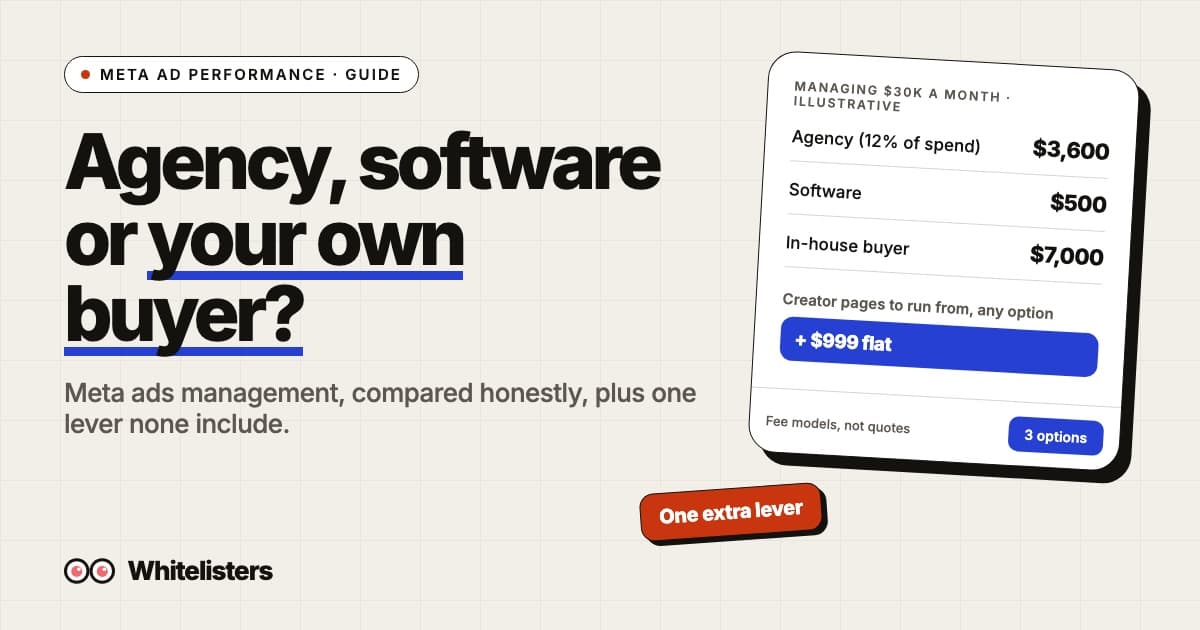
- Set permissions across all three assets if you use an agency. Meta says an agency needs access to the Instagram account, Facebook page and ad account. How an agency, software or an in-house buyer each fit with creator pages is in Meta ads management: agency, software or your own media buyer.
- Choose the header identity on purpose. You can show both identities, the first only, or let Meta pick a dynamic identity, which is on by default. Meta’s setup guide covers it.
More detail: the complete guide to Meta partnership ads, how to lower CAC on Meta ads and how much Meta ads cost.
What we have seen when we followed the checklist
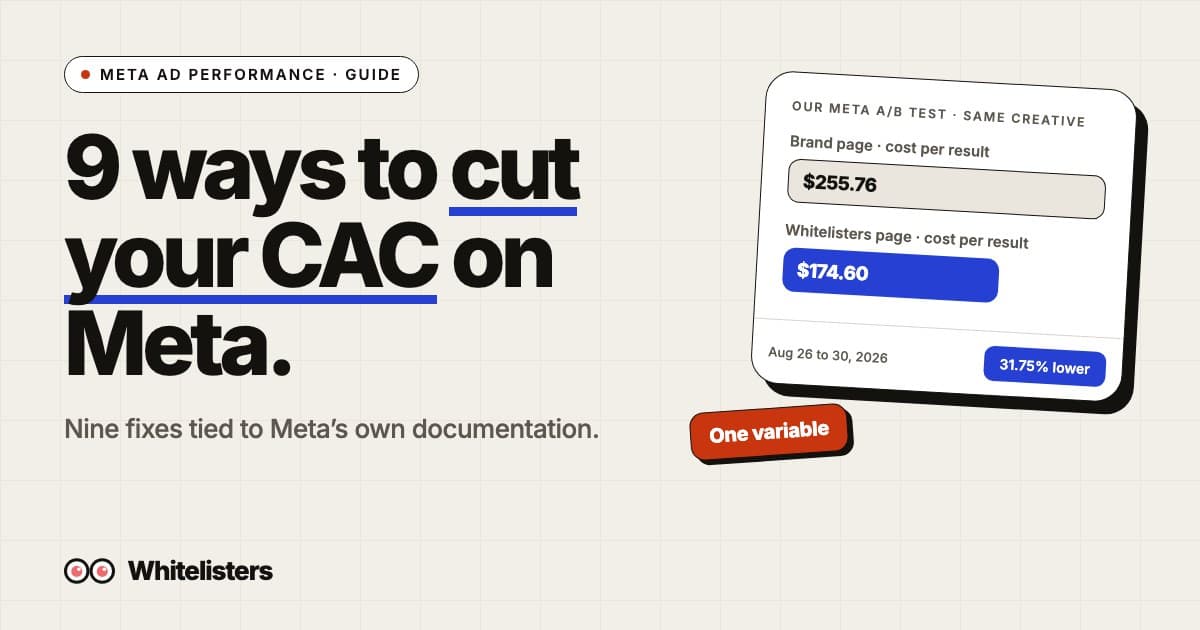
We ran a Meta A/B test with identical creative where the only change was the page identity. The test ran August 26 to 30, 2026, shorter than Meta’s seven-day recommendation. The Whitelisters page cost $174.60 per result against $255.76 for the brand page, 31.75% lower, on 25 purchases against 17. That is one small test, and we treat it as a reason to test, not a rule. The full table is in our whitelisting explainer.
Frequently asked questions
How long is the Meta learning phase?
Meta says ad sets usually exit the learning phase after about 50 results in the week after the ad set’s last significant edit.
How long should an A/B test run?
Meta recommends a minimum of seven days for the most reliable results, allows up to 30, and says tests shorter than seven days may be inconclusive. Run longer if your customers take longer than seven days to convert.
What is creative fatigue?
Creative fatigue occurs when an audience has seen the same creative too many times. People may be less likely to engage, which can lead to a higher cost per result.
Do I need to label partnership ads?
Branded content carries Meta’s Paid partnership label, and a boosted post or unpublished ad also carries an Ad label. You are also responsible for any legal disclosures that apply.
How many ad sets should I run?
Fewer, broader ones. Meta says that creating many ads and ad sets means the system learns less about each, and that combining similar ad sets combines learnings.
Should I test by pausing and starting ad sets?
Meta advises against it. It recommends its A/B test tool because informal on-off testing can lead to overlapping audiences and unreliable results.

Zachary DiBlasi
Zachary DiBlasi is the founder and CEO of Whitelisters and MindfulAds.com. He has managed over $200m in ad spend for brands including Kalshi, MrBeast, Descript, Framer, Justin Bieber and Runna by Strava.
Sources
- Meta: About the learning phase
- Meta: Best practices to potentially reduce cost per result
- Meta: About creative fatigue recommendations
- Meta: About ad auctions
- Meta: About A/B testing
- Meta: Best practices for A/B testing
- Meta: Ads pricing and cost overview
- Meta: About partnership ad permissions
- Meta: Branded Content Policies
- Meta: About labels on paid partnership posts