AI Influencers for Paid Social: How Brands Use AI Creator Pages
How brands run Meta partnership ads from AI creator pages, how they compare with human creators, what our test showed, and the disclosure rules to follow.

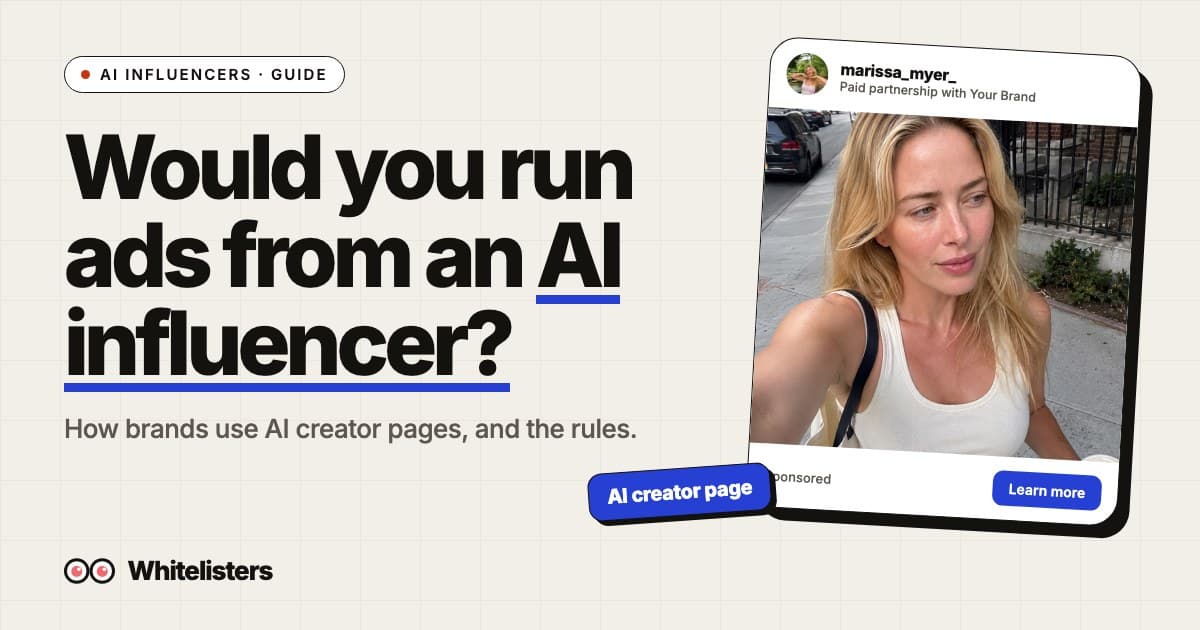
An AI influencer is a creator identity, with a name, a look and a feed, that is generated and run with AI tools instead of being a single human’s personal account. In paid social, brands use these pages the way they use human creator pages: as the identity a partnership ad runs from. The ad is still bought and controlled by the brand. The page simply gives it a face and a handle that fit the audience.
This guide explains how AI creator pages are used in Meta partnership ads, what to check before you run one, and what the disclosure rules say. It is general information, not legal advice.
How brands use AI creator pages
A partnership ad runs under a partner’s handle together with yours. Meta’s format features the partner and advertiser accounts in the ad’s header and uses signals from both accounts for improved ranking and incremental performance. Nothing in the format requires the partner to be a human celebrity, only that the account owner grants permission.
That is the model behind the Whitelisters roster. Most pages on our roster are AI-generated influencer identities actively managed by our team, and the rest are niche theme pages. A brand requests the pages it wants, our team approves the request through Meta, and the brand runs its own creative from the page.
Human creators vs AI creator pages
| Individual human creator | AI creator page on a roster | |
|---|---|---|
| Access | Negotiated per creator, usually with a recurring fee | One flat price per brand Instagram account for the whole roster |
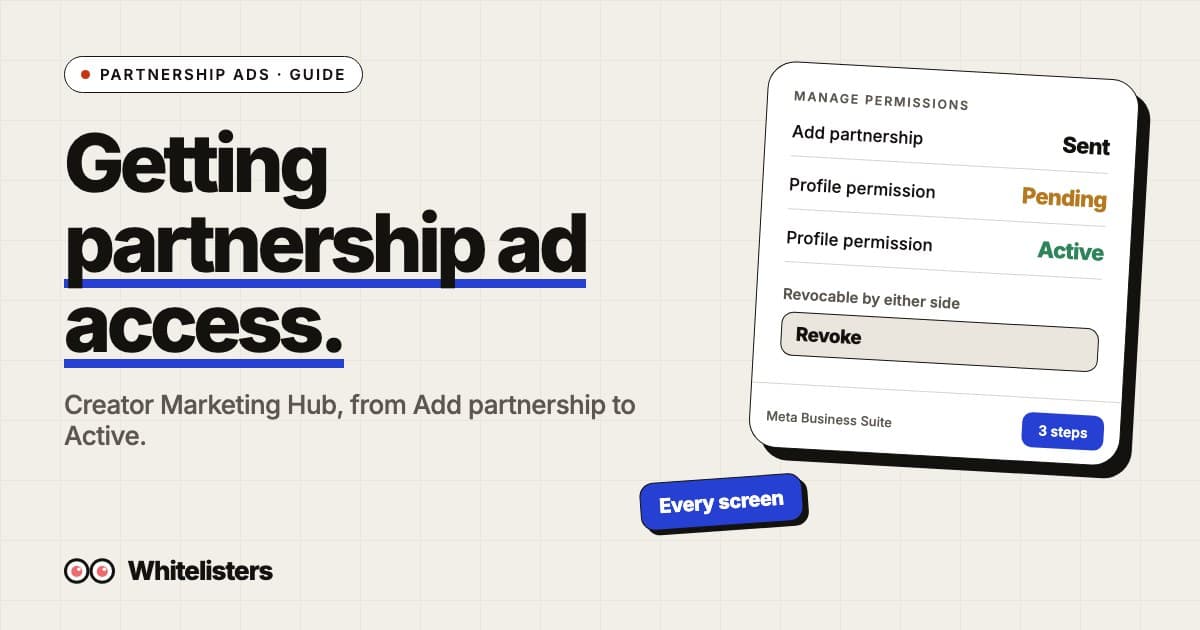
| Permission | The creator approves and can revoke it | The page owner approves and can revoke it |
| Creative | Often made by the creator | Supplied by the brand |
| Fit with your audience | Limited to creators you can source | Pick from many pages by look, niche and style |
Both are used inside the same Meta format and follow the same permission rules: advertisers need permission from the partner whose handle the ad includes, and partners can revoke it at any time.
What the data shows so far
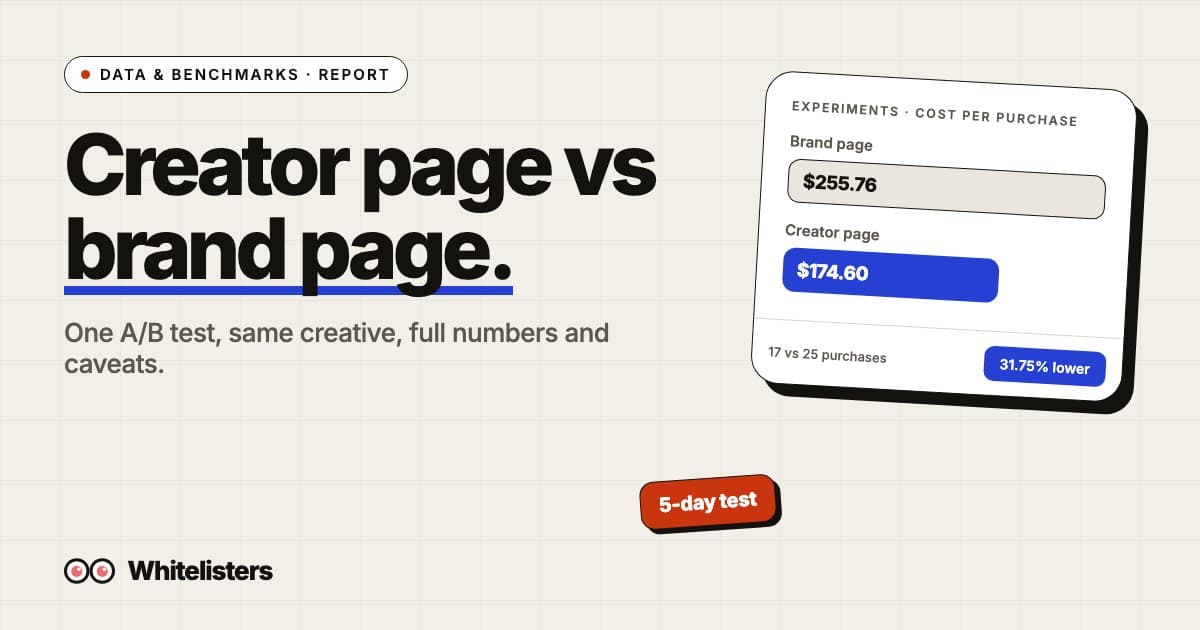
The relevant question is not whether a page is human or AI but whether the ad performs from it. We tested a Whitelisters creator page against a brand page with identical creative:
We ran this test in Meta Ads Manager’s Experiments tool in August 2026 (August 26 to 30). Both ad sets used the same creative, budget and audience. The only difference was the page identity: one ad set ran from the brand’s own page, the other from a Whitelisters creator page (@offthegridgirlie). The goal was website purchases, and each side spent about $4,350 (cost per purchase multiplied by purchases).
| Test group | Cost per purchase | Purchases | Reach | Impressions |
|---|---|---|---|---|
| A: Brand page | $255.76 | 17 | 291K | 506K |
| B: Whitelisters page | $174.60 | 25 | 259K | 521K |
Cost per purchase was 31.75% lower on the Whitelisters page. Treat this as one data point, not a promise. It is a single test with a small sample (17 and 25 purchases), and it ran for five days, shorter than the seven-day minimum Meta recommends for the most reliable A/B results. The way to know what your own ads will do is to run the same split on your account.
That is one test, so we don’t claim it as a rule. Judge any page, human or AI, by what the ad does in your account, not by its follower count. The full method for testing it cleanly is in how to lower CAC on Meta ads.
Disclosure: what you need to get right
- Meta’s paid partnership label. Branded content shows “Paid partnership with” the partner’s name, and a boosted post or unpublished ad also carries an “Ad” label. Every ad on our roster runs with it.
- Meta’s AI labels. Meta adds “AI info” labels to a wide range of video, audio and image content when it detects industry-standard AI indicators or when people disclose that content is AI-generated. Content generated with AI tools may be labeled.
- The FTC’s endorsement rules. The FTC’s Endorsement Guides (16 CFR Part 255) require clear disclosure of material connections between an advertiser and an endorser that the audience would not expect. The FTC’s own disclosure guide for influencers explains how to make a disclosure clear and conspicuous. In its 2023 update the FTC also said its definitions are meant to cover non-existent entities that purport to give endorsements, so do not treat an AI persona as outside the rules.
- Meta’s branded content policy. The Branded Content Policies still apply, including prohibited and restricted categories, and they remind you that you are responsible for any legal disclosures.
Because the rules turn on what your audience would reasonably expect, ask your own counsel how they apply to your product, especially in regulated categories such as financial products.
A checklist before you run an AI creator page
- Confirm permission is active and who can revoke it.
- Make sure the paid partnership label and the ad label show in the ad preview.
- Check your category against Meta’s prohibited, restricted and pre-authorization lists.
- Match the page’s look and niche to your product and audience.
- Run a clean A/B test against your brand page before you scale.
- Review the pages’ comments and engagement, and have a plan for questions about who runs the page.
Frequently asked questions
What is an AI influencer?
An AI influencer is a creator identity, with a name, look and feed, that is generated and run with AI tools. Brands use these pages as the identity their partnership ads run from.
Are ads from AI creator pages labeled?
Yes. Partnership ads show Meta’s paid partnership label, and a boosted post or unpublished ad also carries an Ad label. Meta may also add an AI info label to AI-generated content.
Does an AI creator page need permission like a human creator?
Yes. To run partnership ads, advertisers need permission from the partner whose handle the ad includes, and the account owner can revoke it at any time.
Who runs the Whitelisters pages?
Most pages on the roster are AI-generated influencer identities actively managed by our team, and the rest are niche theme pages.
Do the FTC disclosure rules apply to AI personas?
The FTC’s Endorsement Guides require clear disclosure of unexpected material connections, and the FTC has said its definitions cover non-existent entities that purport to endorse. Ask your own counsel how they apply to your product.
Do AI influencer ads follow Meta’s ad policies?
Yes. Partnership ads go through Meta’s ad review like any other ad, and branded content must follow the Branded Content Policies, including the prohibited and restricted categories.

Zachary DiBlasi
Zachary DiBlasi is the founder and CEO of Whitelisters and MindfulAds.com. He has managed over $200m in ad spend for brands including Kalshi, MrBeast, Descript, Framer, Justin Bieber and Runna by Strava.
Sources
- Meta: About partnership ads
- Meta: About partnership ad permissions
- Meta: About labels on paid partnership posts
- Meta: Our approach to labeling AI-generated content
- Meta: Branded Content Policies
- FTC: Endorsement Guides, 16 CFR Part 255
- FTC: Disclosures 101 for social media influencers
- FTC: Endorsement Guides, 2023 revision